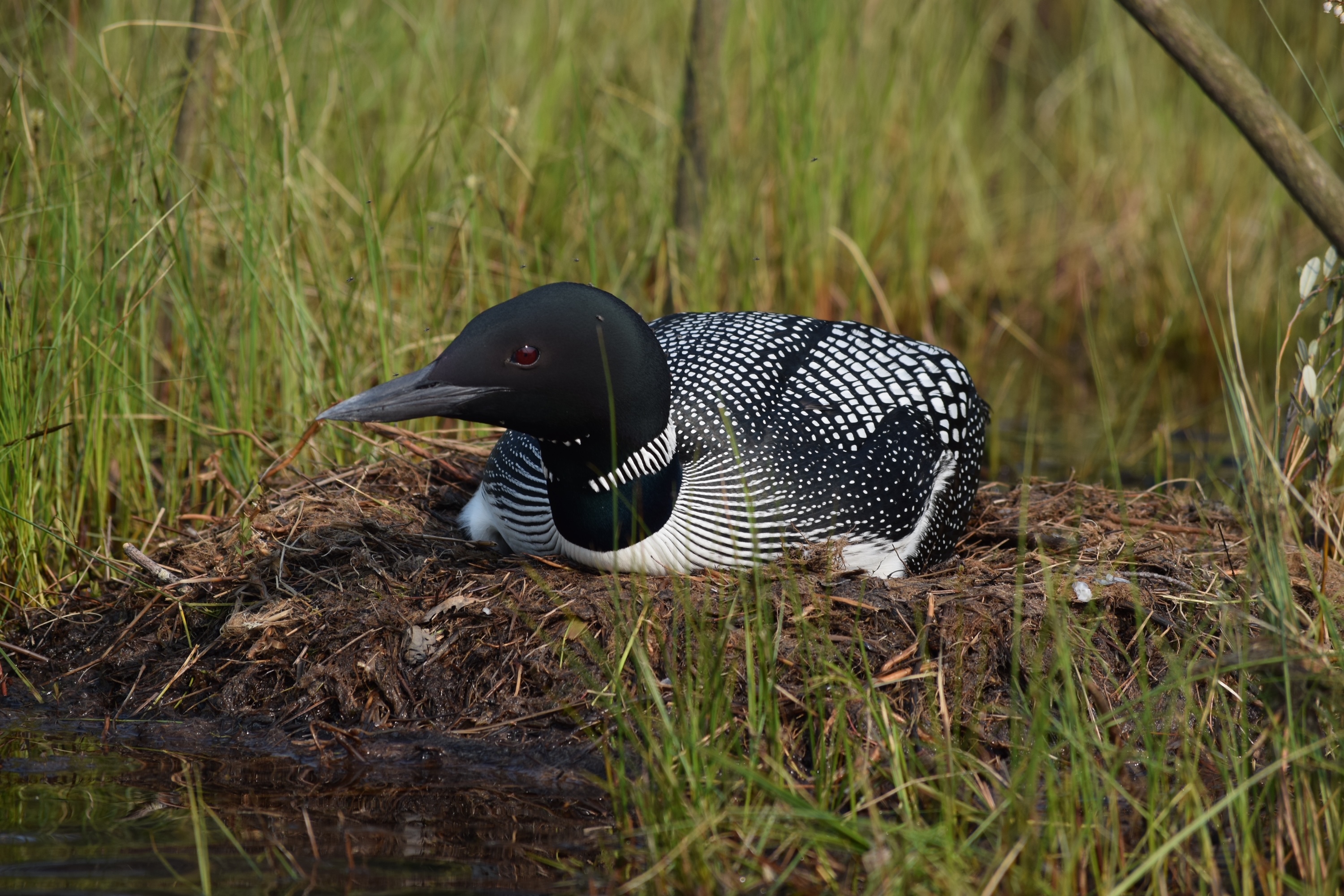
A common loon at its nest beside a Northwoods lake — the wildlife our AIS prevention efforts protect

Aquatic invasive species

Help fight AIS in Hazelhurst waters

A few simple habits at the boat launch keep our lakes clean. Here is what aquatic invasive species are, how they spread, and what every boater and shoreline owner can do to slow them down.

What is AIS

Aquatic invasive species, in plain terms

Aquatic invasive species — AIS for short — are non-native plants, animals and pathogens that arrive in our waters from somewhere else and outcompete the species that belong here.

Once an invasive plant or animal establishes itself in a lake, it is hard and expensive to remove. Eurasian watermilfoil mats can clog props and crowd out native cover that walleye and bluegill rely on. Zebra mussels filter so much algae from the water column that they alter the entire food web. Spiny water flea sneak in on a wet anchor rope, then collapse the populations of native zooplankton that small fish feed on.

The good news: AIS spread mostly through human activity, which means human activity can stop them. A boat that is inspected, drained and dry before it touches the next lake won't carry hitchhikers. A wader or paddle rinsed at the access keeps spores off the next shoreline. Hazelhurst's lakes are clean today because residents make those habits routine.

Below are the species we watch for in Oneida County, the four-step boater checklist, and how to volunteer with the Unified Lake Group on the lake closest to you.

  • Eurasian watermilfoil

    A feathery underwater plant that forms thick mats. Spreads from broken stem fragments caught on props, trailers and live wells.

  • Curly-leaf pondweed

    An early-season invader with crinkled leaves. Dies back midsummer and crashes oxygen levels as it decays.

  • Spiny water flea

    A tiny zooplankton with a long, barbed tail. Travels in water trapped in bait buckets, anchors and live wells.

  • Zebra mussels

    Fingernail-sized striped mussels that attach to almost any hard surface. Microscopic larvae move in any standing water — including a partially drained bilge.

Boater checklist

Four steps at every launch

It takes about five minutes. State law already requires steps 1 and 3 — making 2 and 4 part of the routine is what keeps the lake yours.

  1. Inspect

    Look over the boat, motor, trailer, anchor, live well and any gear. Check the spots that catch weeds — bunks, rollers, axles, props.

  2. Remove

    Pull off any plants, animals and mud you find. Place them in the trash at the access — never back into the water or into the woods.

  3. Drain

    Drain all water from the boat, motor, live well, bait container and bilge before leaving the access. Required by Wisconsin law.

  4. Dry

    Dry the boat and gear for at least 5 days before launching elsewhere — or rinse with hot (104° F+) water if you can't wait.

Unified Lake Group

Volunteer with your lake

Hazelhurst's Unified Lake Group is a resident-led, town-recognized partnership between the lake associations and the Town Board. We coordinate AIS prevention, monitoring and shoreline education across all of Hazelhurst's lakes.

Meeting schedule

  • Last Monday of each month, 6:00 p.m.
  • Hazelhurst Community Center, 7020 Hwy 51
  • Open to all residents and shoreline owners

Ask to be added to the email list

What we do

  • Staff Clean Boats / Clean Waters inspection shifts at public boat launches
  • Coordinate annual point-intercept surveys of native and invasive plants
  • Distribute educational signage and outreach to riparian owners
  • Apply for AIS grants and report results to the Town Board

New volunteers always welcome — most shifts are 2–3 hours and you can pick the dates that work for you.

Be part of the solution

Three hours a year keeps a lake clean

Most of our boat-launch volunteers contribute one or two short shifts a season. Your willingness to chat with arriving boaters is the single most effective AIS tool we have.

Volunteer with the ULG Read lake ordinances